

Emil Aaltonen Museum – Permanent Exhibitions
1.1.2000 - 31.12.2100
00.00 - 00.00
Pyynikinlinna, Palomäentie 2a, 33200 Tampere
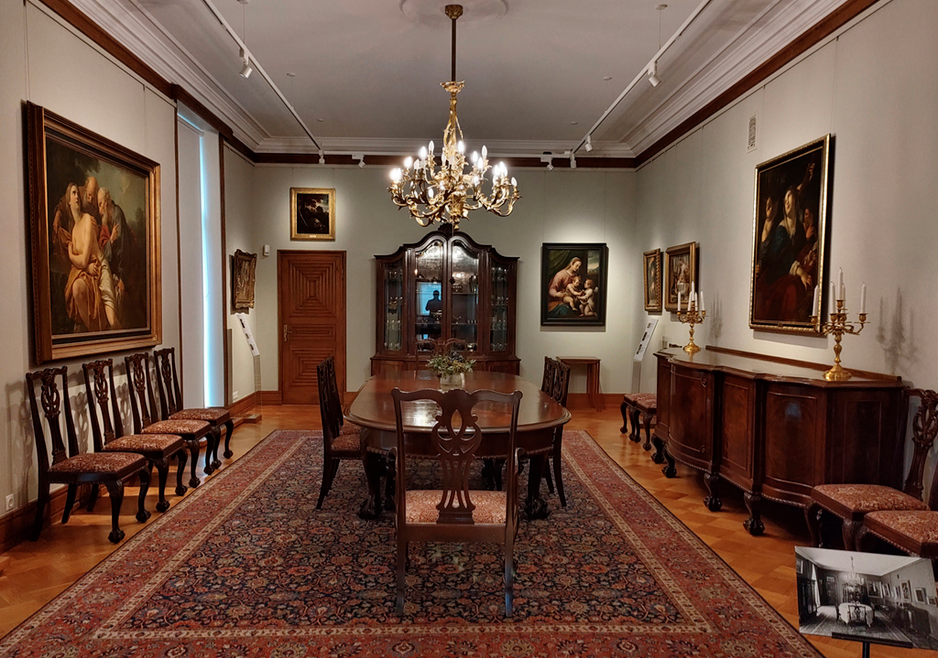
On display are art from the 16th-20th centuries and we get to know Emil Aaltonen as an industrialist and supporter of culture. Changing exhibition: Deep / Surface -Submersibles from Lokomo.
The Emil Aaltonen Museum of Industry and Art was opened in Pyynikinlinna in 2004. The main floor displays works from Emil Aaltonen’s art collection. On the upper floor, visitors can explore several permanent exhibitions: an exhibition about Emil Aaltonen (1869–1949), presentations on companies owned by Aaltonen, a multimedia display about the Ylikartano estate owned by Aaltonen, and a room showing a film about his life. Temporary exhibitions are also located on the upper floor.
Selected artworks from the collections
Through the museum’s current exhibition, visitors can explore the development of Finnish painting in the 19th century. Some of the first Finnish artists to engage with the international art world included Robert Wilhelm Ekman — represented here by works such as Lemminkäinen on the Fiery Lake (1867) — and Alexander Lauréus, whose The Winemaker’s Family (1822) is also on display. In the latter half of the 19th century, Finnish artists became increasingly interested in plein‑air painting, with Paris emerging as a central hub. Among the artists in the exhibition who embraced the principles of naturalism and realism are Albert Edelfelt, Helene Schjerfbeck, Maria Wiik and Fredrik Ahlstedt.
As the 20th century began, the artistic field expanded into a wide range of styles. Symbolism emerged as one of the leading movements. One of its Finnish adopters was Hugo Simberg, whose painting Shepherd Girl (1913) interestingly combines elements of symbolism and naturalism. Also representing the same century are Antti Favén’s 1935 portraits of Emil Aaltonen and his daughters Saimi Mustakallio and Elsa Kivekäs.
Emil Aaltonen – Industrialist and Patron of Culture
Visitors to the museum are introduced to Emil Aaltonen not only as a private individual and businessman but also as a supporter of national culture and science. Aaltonen began his career as a shoemaker in the late 19th century in Hattula, and after relocating to Tampere he quickly rose to become a leading industrialist. Among his companies were Aaltosen Kenkätehdas Oy, Sarvis Oy and Lokomo Oy. In addition to his industrial pursuits, Aaltonen was deeply committed to promoting culture and research.
The upper‑floor exhibition presents Emil Aaltonen’s industrial activities and the foundation he established. Through objects, photographs and timelines, visitors can learn about the history of the industrial plants he owned. The exhibition covers the histories of Lokomo, Sarvis, and the shoe and leather factories under Aaltonen’s ownership.
Also on display are Emil Aaltonen’s personal belongings, such as his shoes, a top hat intended for formal occasions, and a telescope he owned. A selection of items from Sarvis’s diverse product range is exhibited, from tableware and utensils to toys. The Lokomo display case features scale models of crushers, road machinery and forestry equipment. Shoes from various decades are also included. In the museum’s video room, visitors can watch a biographical film about Emil Aaltonen as well as several other videos related to his industrial enterprises.
Emil Aaltonen – Agricultural Entrepreneur
One room in the museum is dedicated entirely to Ylikartano, the large estate once owned by Emil Aaltonen. Visitors can explore the estate through a multimedia presentation and a detailed scale model.
Further information: Briefly in english – Pyynikinlinna
1.1.2000 - 31.12.2100
00.00 - 00.00
Pyynikinlinna, Palomäentie 2a, 33200 Tampere